Our Story

It started with one man, an empty back lot, and a question about what more could be done.The doors opened in 2005, and the question has not changed since.

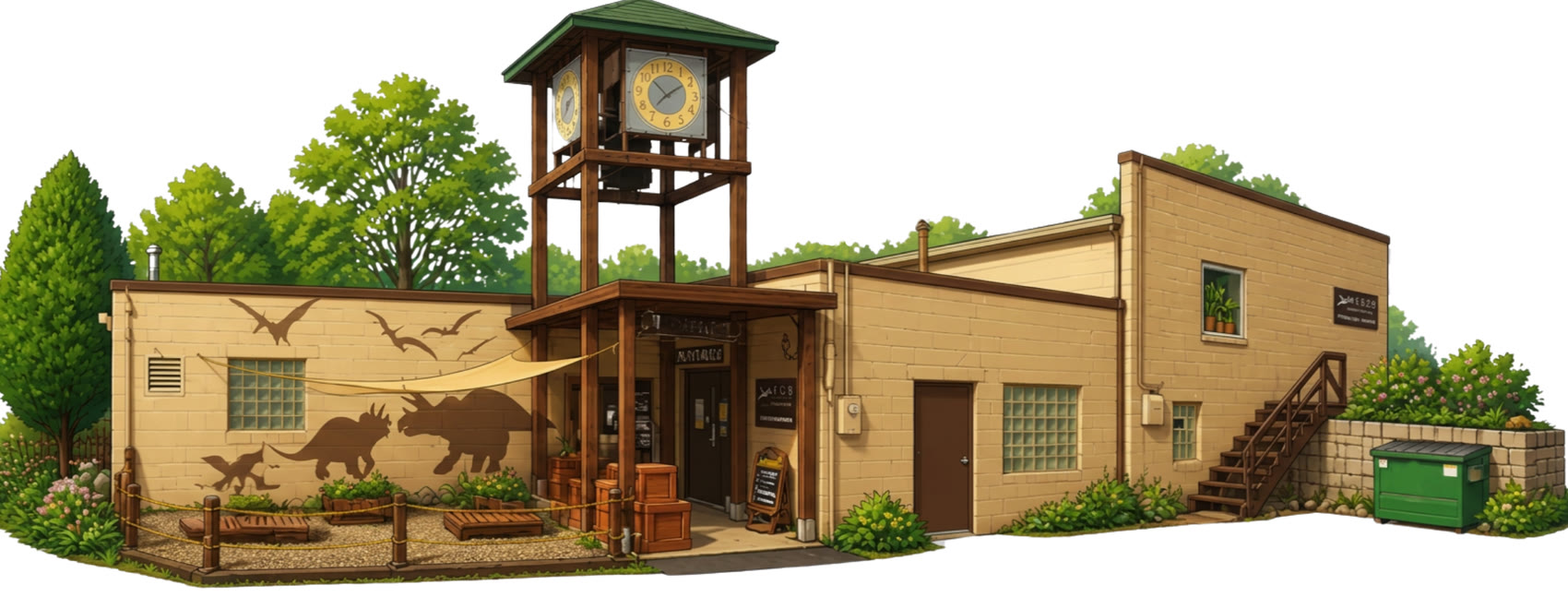
An illustration of the museum building: a long single-storey block in cream masonry, with a wooden clock tower over the entrance, a shade sail and a dinosaur mural along the near wall, and a fenced gravel play area in front.
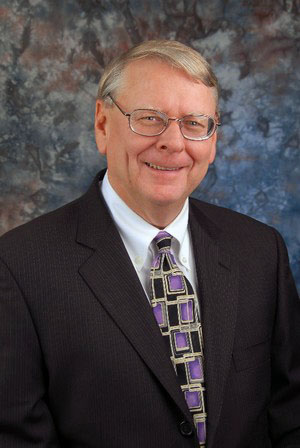
Bill Sanderson, the museum's founder, in a dark suit and patterned tie.
Bill Sanderson, Founder

How it started

It Began with a Question

Bill Sanderson spent his working life in financial planning, and before that he taught middle-school science in Cincinnati. When he finished a master's degree in Christian leadership at Malone University in Canton, the degree did not settle anything for him. It sharpened something he had been carrying around for a while. He knew teaching was the gift he had been given. He had a small group to use it on, and he was grateful for it. He also could not shake the feeling that it was meant to reach further than that.

What kept pulling at him was the argument over origins, and how little of that argument ever reaches an ordinary family in plain language. So he went and looked at what other people had already built. California, Glen Rose in Texas, Pensacola. He came home with a notebook full of ideas and one of his own.

The idea was two things at once. A museum that told the truth about creation, and an outdoor adventure land where children could climb and swing and wear themselves out. Not a classroom with a playground bolted onto the side of it, but one place where a family could spend the whole day and get both.

He already had the building. It was his office, and behind it sat a wooded back lot doing nothing at all. Years before, he had painted a sunset mural on the wall there, purely so he would have something beautiful to look at on his way in to work. It is still there, under a few coats of paint. Around 2003 he and his friend Dennis Osborn started clearing the ground behind it.

“I wanted to do something that reached lives beyond just the small group.”

Bill Sanderson · Twentieth anniversary, 2025

Two men and a back lot

Built by Hand

Nobody was hired to build the museum. Bill bought a truck, brought in a trailer, and got hold of a tractor, because it took all three to move anything, and he and Dennis Osborn spent the better part of two years on it. They started outside, where most of the work was. The ribbon was cut that May, and the grand opening ran three days, June 16 to 18, 2005.

  • The Grounds

    Nearly everything outside was built by hand, and a fair amount of it was given. The fifty-six-foot slide was donated on the condition that somebody come and get it, so they took the whole thing apart, laid it on a trailer, and hauled it home over the course of a day. The four-person swing, the swinging bridge, and the zip line are all still out there, still in use, still inspected every year.

  • The Collection

    Most of the fossils in the museum came out of Bill's own collection, gathered over years before there was any building to put them in. Some of it sits behind glass. A good deal of it does not. The woolly mammoth bone gets passed from hand to hand through nearly every group that walks through, and hundreds of thousands of people have now held it.

  • The Models

    Noah's Ark, the Grand Canyon, the Lambton Worm, and our Museum Raptor were all hand-built by volunteers, and all four are still landmarks on the floor. The Ark's interior is finished out under the roof, every pen in place. The canyon is a cross section at 1/72 scale, every layer labeled and hand-painted. The worm is a reptilian creature from an old English poem, shown coming up out of a well.

Almost all of it is still in daily use. The overall layout and shape of the museum were completely overhauled in 2016, including many more vibrant new exhibits. The outdoor play park is now managed by the Science Center website, opens in a new tab itself while the fossils, models, and exhibits are ours.

Two names, one building

What Changed, and What Did Not

For the first decade it all sat under one roof and one name, and people could not always tell what they had walked into. A family booking a birthday party and a church group coming to ask about origins were reading the same brochure and getting the same answer. So in 2016 the two were formally separated. The camps, the parties, the homeschool classes, and the community programs stayed with the Akron Fossils & Science Center. The exhibits about origins became the Creation Education Museum, with its own name and its own purpose. It made both halves easier to explain, and easier to support.

The museum itself was rebuilt around the same time, largely by volunteers, and it is not the room it was in 2005. The displays are interactive. The evidence is current, and board members keep bringing more of it in. What has not changed is the point of the thing. You are shown the evidence, you are told plainly how it gets read from both sides, and then the decision is handed back to you. That is still the theme on the wall: you decide.

Bill puts the reason for it simply. The church has the most important place in your life, and it does not always have room for the science of how to defend what you believe. That is the gap the museum stands in. It has been standing in it since 2005, and hundreds of thousands of people have come through the doors in the meantime. Some of them came back years later to say it changed everything. Some of them were not convinced at all. Both are welcome.

“A lot of it has remained the same. Because it's true.”

Bill Sanderson · Twentieth anniversary, 2025

Listen to the whole talk Audio only · 56 minutes · on the Creation Speaks page

See the Exhibits